
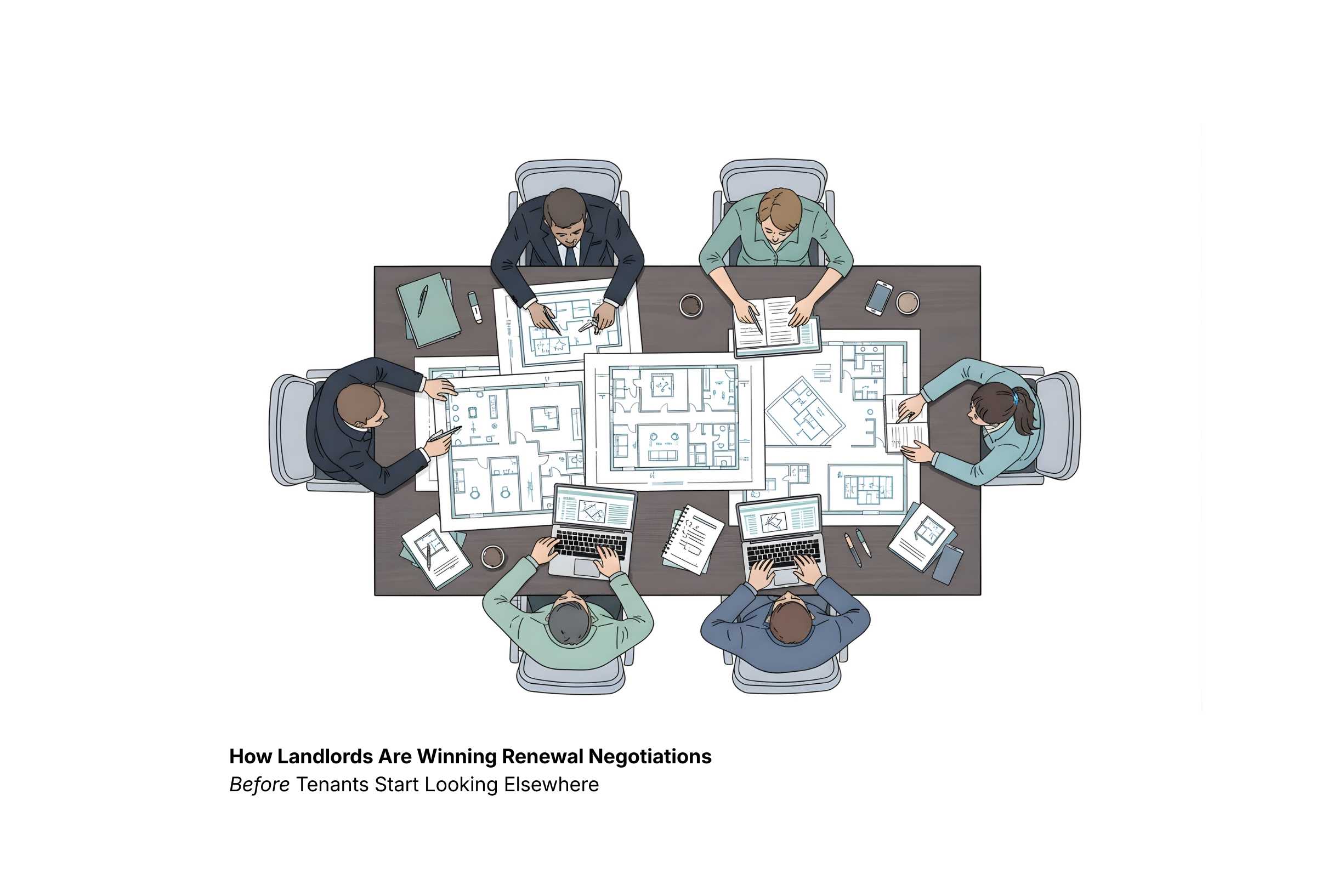
- Commercial real estate is entering its most consequential lease renewal cycle in decades. David Bitner, executive managing director of global research at Newmark, advises landlords to engage key tenants early with creative spatial solutions. With tenants downsizing by 20% on average, decisions happen within months, not years.
- The competitive dynamic is unforgiving. One lease renewal tracked by Atlas Capital Advisors revealed a landlord who waited ultimately offered rent reductions 15% below their initial bottom line, plus additional concessions, after the tenant toured competitive properties.
- Property teams winning renewals share a pattern: they demonstrate how downsized requirements can be accommodated before tenants request proposals. When spatial questions are answered immediately, tenants commit to renewals. Those answering with "let me schedule our architect" lose momentum while tenants evaluate alternatives.
- Close renewals up to 90 days faster than traditional approaches: When tenants mention downsizing, present optimized layout scenarios showing different density options and configurations. Secure lease commitments in your first few meetings, while competitors wait weeks for architect availability.
- Eliminate competitive property tours through demonstrated flexibility: Show tenants side-by-side comparisons of current versus optimized layouts that reduce square footage while improving functionality. When spatial needs are addressed comprehensively, exploring competitive options becomes unnecessary, avoiding vacancy exposure.
- Maintain negotiating leverage throughout renewal discussions: Export immersive 3D visualisations tenants share with senior teams for approval, keeping momentum concentrated on your building. Decision cycles compress from months to days, when spatial solutions are presented immediately rather than promised eventually.
Q1: When should landlords initiate lease renewal conversations?
Industry guidance recommends beginning discussions 18–24 months before expiration. This timeline provides sufficient runway for space planning while preventing tenants from evaluating competitive properties. Waiting until 12 months or less significantly reduces negotiating leverage.
Q2: What if our building cannot accommodate tenant downsizing requests?
Most buildings accommodate reduced footprints through reconfiguration, floor consolidation or partial floor solutions. Demonstrating these options positions your building competitively even when total square footage decreases. Tenants prioritize operational functionality over raw size when spatial planning addresses their requirements.
Q3: How do landlords prevent tenants from using spatial proposals for competitive leverage?
Present spatial solutions as collaborative renewal discussions rather than formal proposals. Frame layouts as exploring mutual fit rather than binding offers. When tenants see genuine partnership addressing their requirements, they engage constructively rather than extracting concessions through competitive tension.
Property teams are securing renewals by demonstrating space planning solutions early in tenant conversations. Those using traditional approaches enter negotiations from disadvantaged positions after tenants evaluate competitive options. Discover how landlords are strengthening tenant retention by booking a demo with laiout.
Find out the latest news involving laiout, AI Floor plan generation and Proptech.

