In other words, yes: AI is a real benefit. And it’s already changing how companies plan, pitch, and adapt their workspaces.
Artificial intelligence is everywhere - at least in the headlines. From smart assistants to self-driving cars, AI is transforming how we live and work. But in the world of office planning, where physical space meets business strategy, does AI actually do anything meaningful? Or is it just another buzzword riding the digital transformation wave?
Let’s cut through the hype. When used well, AI in office planning isn’t about futuristic robots - it’s about simplifying real-world tasks, improving decision-making, and helping teams move faster with greater confidence. In other words, yes: AI is a real benefit. And it’s already changing how companies plan, pitch, and adapt their workspaces.
When people hear “AI,” they often imagine complex algorithms making high-stakes decisions on their behalf - or a black box spitting out layout ideas with no human input. That misunderstanding leads to two common reactions:
The truth is more grounded. In office planning, AI isn’t about replacing human creativity or judgment - it’s about removing the repetitive, time-consuming tasks that slow everything down.
AI-powered floor planning tools do a few key things really well:
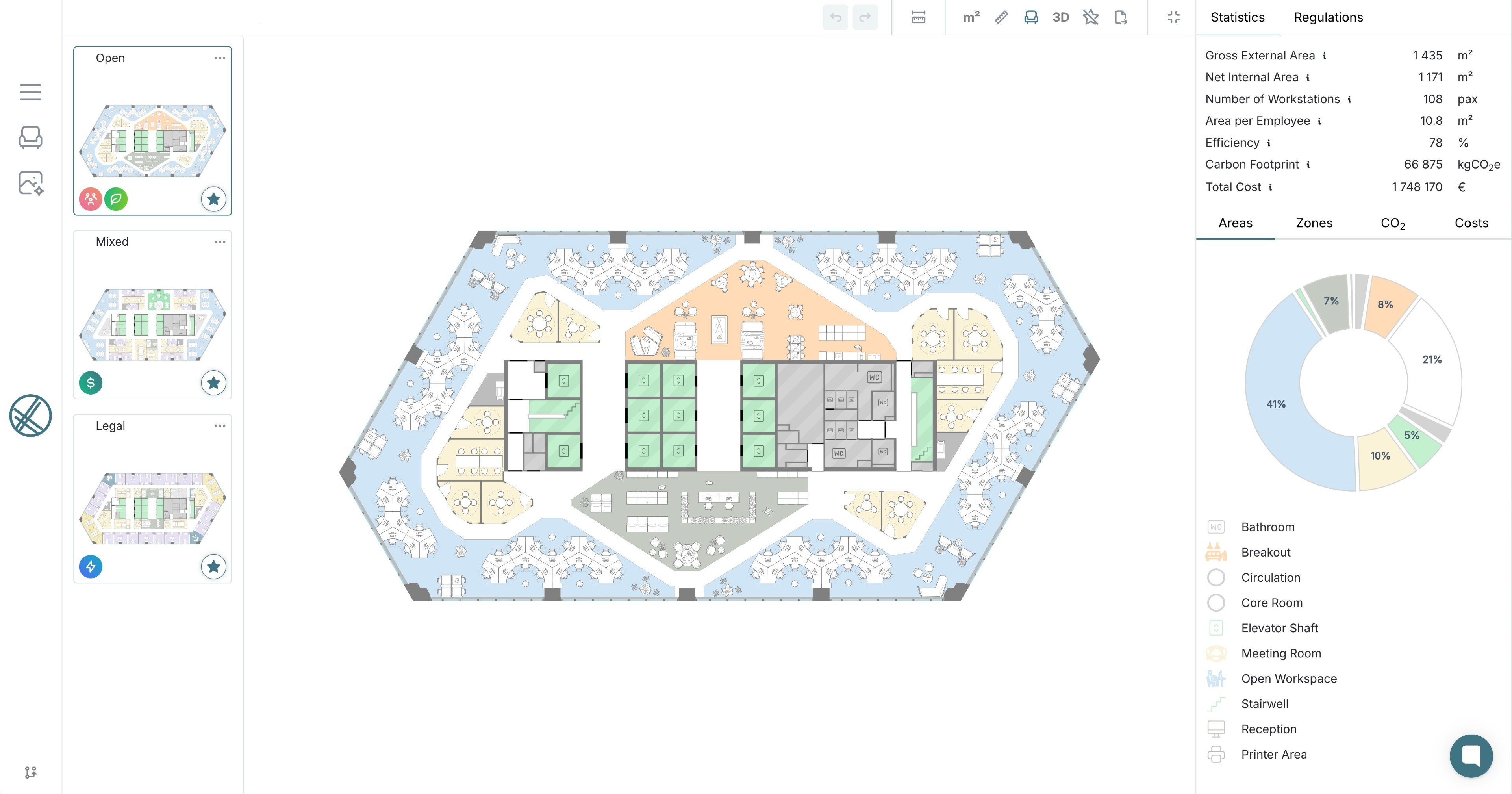
Instead of starting from a blank canvas or waiting days for external consultants, AI can generate initial floor plan proposals in seconds. Whether you’re planning for 20 people or 200, you’ll have a clear visual starting point right away.
This dramatically reduces turnaround time - meaning brokers can respond faster, tenants can decide quicker, and landlords can reduce vacancy periods.
Some tools also provide insights alongside layouts, such as space efficiency scores, cost estimates, or environmental impact indicators. This gives businesses the ability to see not just what a layout looks like, but how it performs across the metrics that matter.
It transforms a layout from a static drawing into a strategic asset.
AI doesn’t work in isolation - it works with your input. Users can define what they want (e.g., more meeting rooms, hybrid setups, fewer fixed desks), and the system adapts the layout instantly.
This is particularly useful in sales and leasing meetings, where showing flexibility in real time builds trust and speeds up decision-making.
AI isn’t replacing any of these roles - it’s making them more efficient, informed, and client-centric.
AI in office planning isn’t a gimmick. It’s not about handing control over to a machine - it’s about giving people better tools to make smarter decisions, faster.
In a world where leasing cycles are tight, workplace models are shifting, and expectations are high, AI-powered tools are no longer a “nice to have.” They’re quietly becoming the new standard.
Curious how AI can improve your office planning workflow? Discover how laiout helps teams design faster, plan smarter, and adapt their space with confidence - no hype, just results.
Get laiout News and Updates right in your inbox.

March 11, 2026
Best AI Space Planning Tools for Commercial Designers in 2026: Automated Test-Fits vs Manual Workflows
March 11, 2026
Office Lease Expirations 2026 to 2028: What Landlords Need to Know About The Renewal Wave
May 22, 2025
What Landlords Should Know About AI Layout Tools Before Their Next Refurbishment
We're always open to hearing from talented people. If you don't see an open role that fits, send a speculative application to careers@laiout.co.Tell us what you'd bring and why laiout resonates with you.

Sign up to our newsletter


.svg)
.svg)


.svg)

